Private pension plan financial case

Retirement planning for a €250,000 investment portfolio.

A portfolio recommendation for a 45-year-old professor in Germany planning to retire at 68, developed around the household’s pension income, private healthcare costs and slightly risk-averse profile.

Current age45
Retirement age68
Initial investment€250k
Investment horizon23 years
Executive summary

A diversified glide path designed around the retirement objective.

The assignment was to construct a retirement portfolio for a private client. The recommendation combines global equities, euro-denominated bonds, infrastructure and gold, with equity exposure reduced as retirement approaches.

Client profile

Long horizon, moderate risk capacity

Married with two children, a non-working spouse and an owned home. No portfolio liquidity is expected before retirement, and the client has a strong understanding of financial markets.

Current age
45
Retirement age
68
Annual salary
€81,600
Private health insurance
€700 / month
Risk profile
Slightly risk-averse
Investment strategy

Dynamic allocation with annual rebalancing

Starting allocation
50 / 40 / 10
Asset classes
Equities, bonds, gold
Rebalancing
Annual
Estimated weighted TER
0.19%
Liability currency
EUR
Retirement objective

Fund the income gap through age 95

Income replacement
90%
Pension sources
Statutory + portfolio
Planning withdrawal rate
4%
Required portfolio
€675,070
Required CAGR
4.4%
Retirement funding requirement

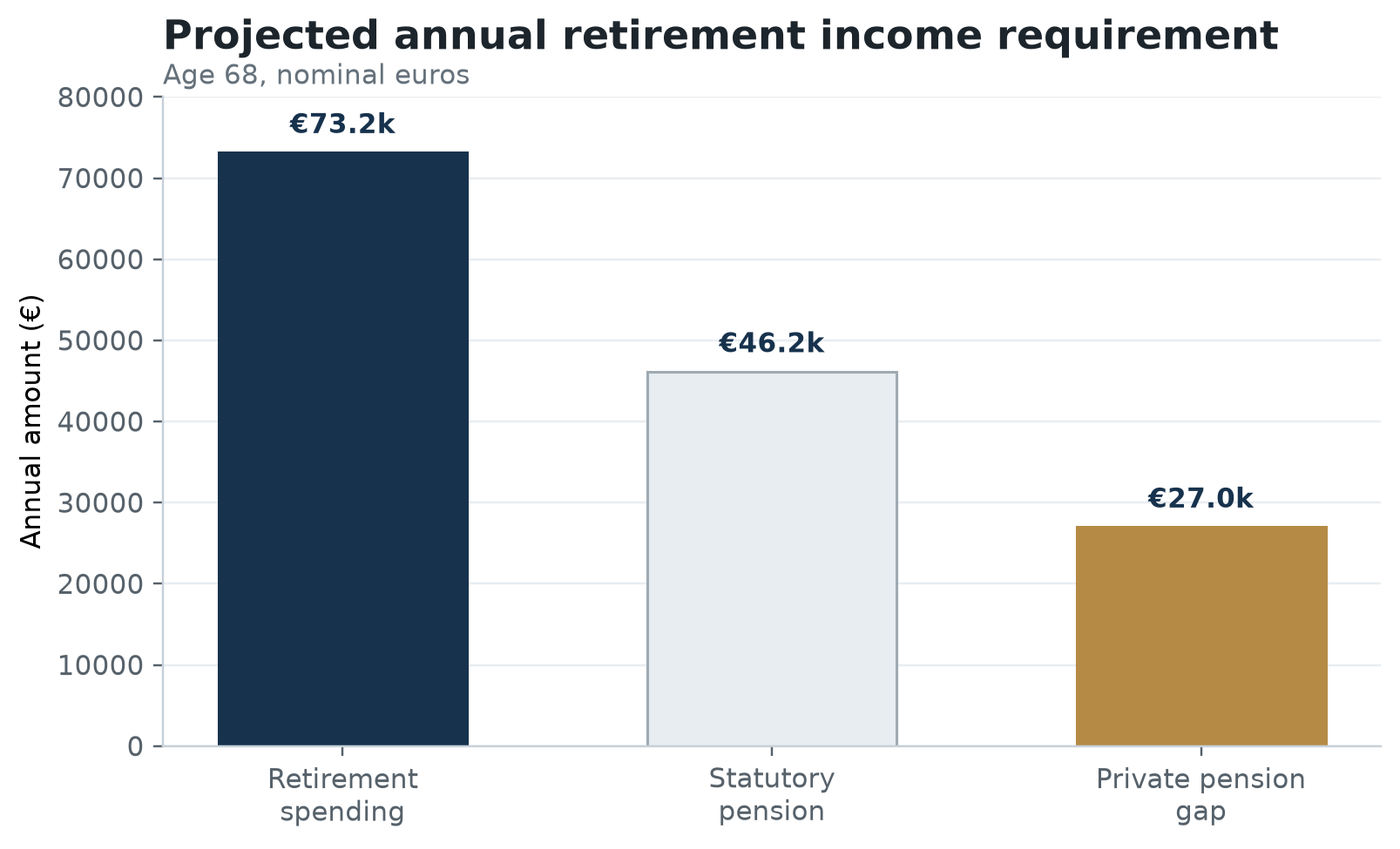
The private portfolio must provide €27,003 a year.

At retirement, annual income needs are projected at €73,157. Net statutory pension income covers €46,155, leaving the balance to be funded by the investment portfolio.

Annual income needed€73,157at retirement
Statutory pension€46,155net annual income
Annual funding gap€27,003from the private portfolio
Required portfolio€675,070at a 4% planning rate
Annual retirement income need, statutory pension income and remaining private funding gap.
Portfolio strategy

Growth today, greater stability closer to retirement.

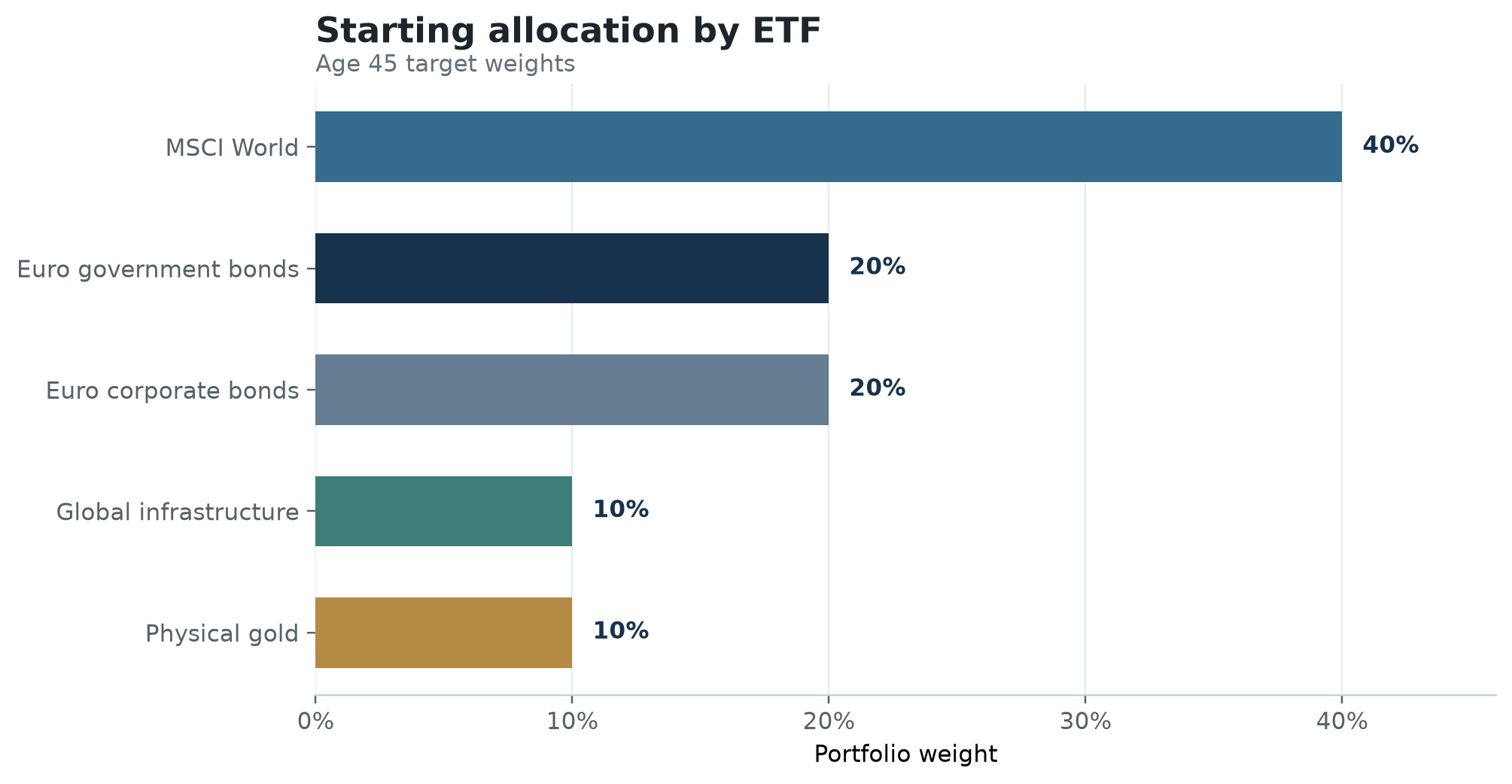
The recommended starting allocation combines 50% equities, 40% euro bonds and 10% gold. The equity allocation provides long-term growth, while bonds and gold support diversification and capital preservation.

Starting portfolio allocation across five ETFs.
Portfolio holdingRoleAllocationAmount
iShares Core MSCI World UCITS ETFGlobal equity growth40%€100,000
iShares Global Infrastructure UCITS ETFReal-asset equity exposure10%€25,000
iShares Core Euro Government Bond UCITS ETFStability and EUR duration20%€50,000
iShares Core Euro Corporate Bond UCITS ETFInvestment-grade income20%€50,000
Invesco Physical Gold ETCInflation and crisis diversification10%€25,000
Investment universe

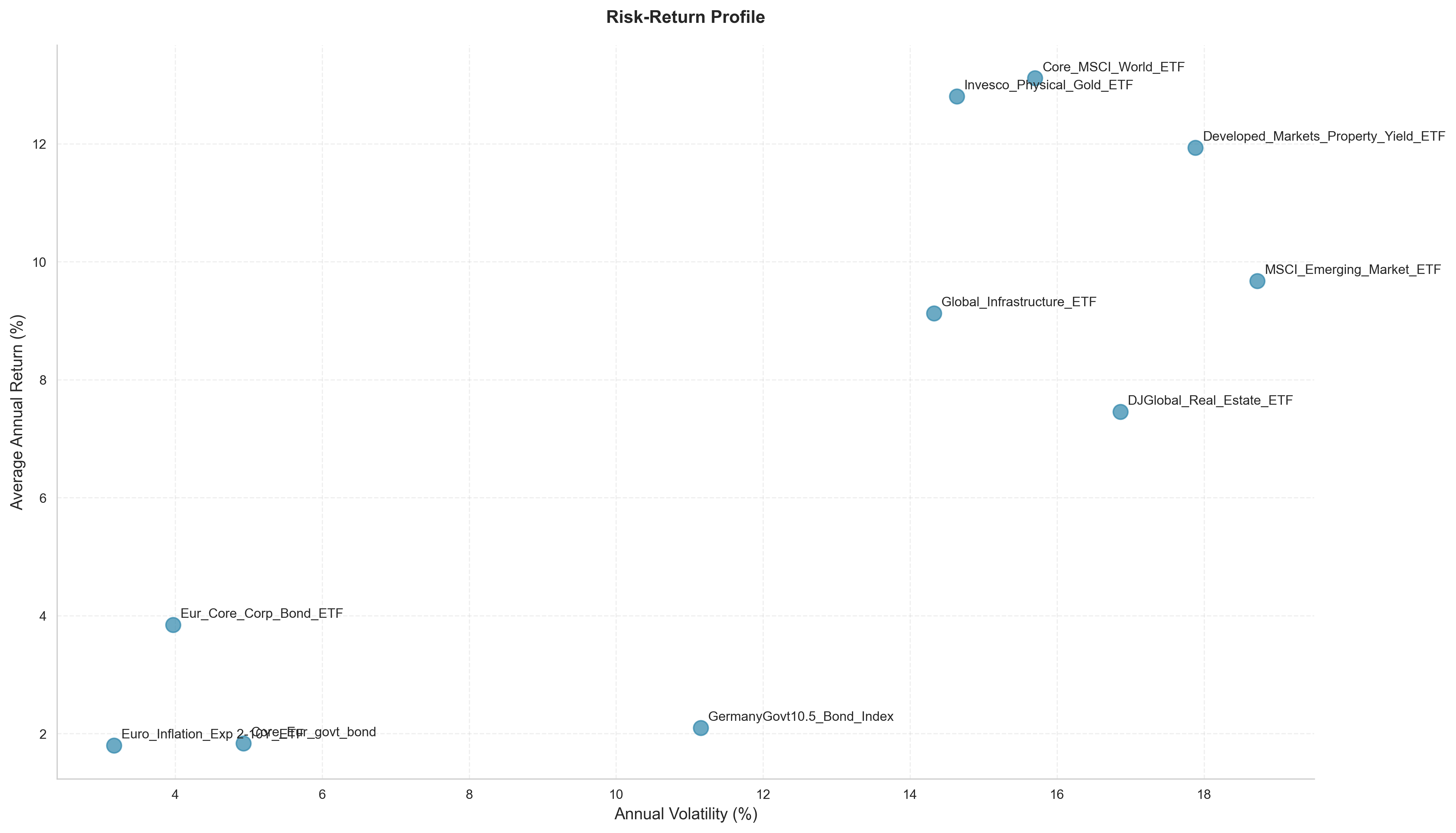
Historical risk and return informed the asset selection.

The broader opportunity set includes global and emerging-market equities, listed property and infrastructure, euro bonds, inflation-linked exposure and gold. The recommended portfolio selects five complementary building blocks rather than simply choosing the assets with the highest historical returns.

Historical annual return and volatility for the broader investment universe considered in the portfolio analysis.
Glide path allocation

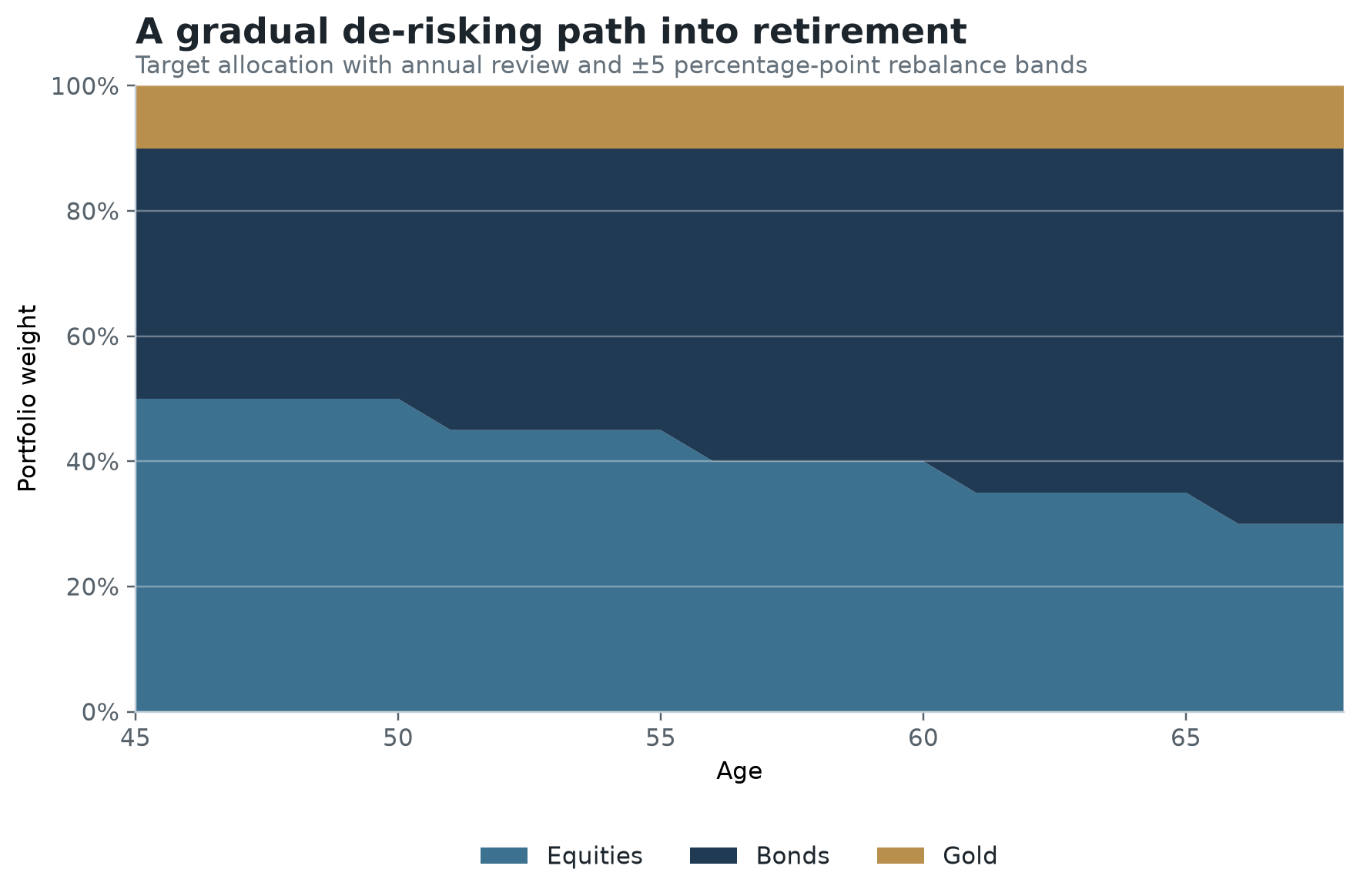
The allocation becomes more conservative over time.

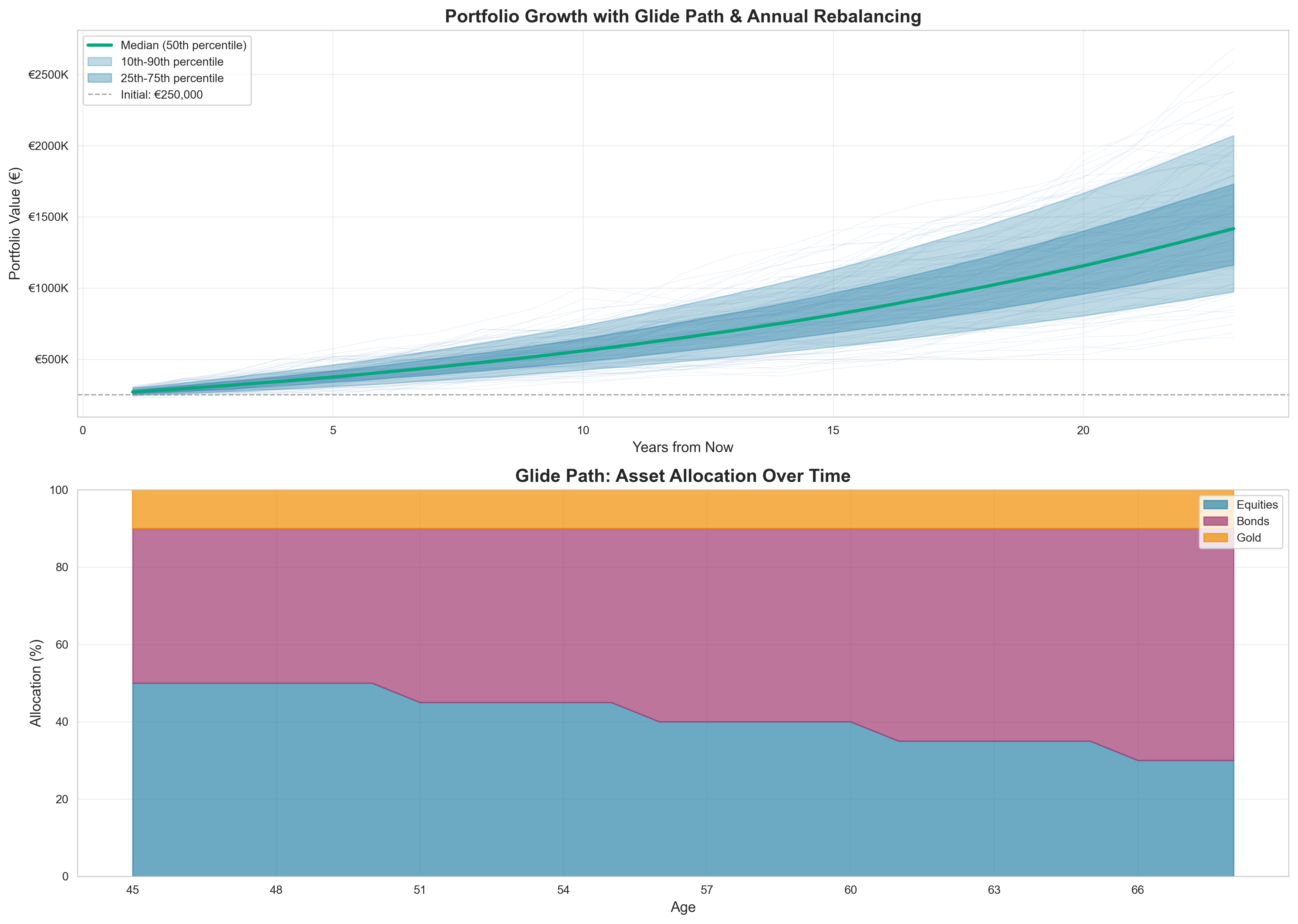
Equity exposure falls from 50% to 30% between ages 45 and 68. Bond exposure rises from 40% to 60%, while gold remains at 10% throughout.

Glide path showing falling equity exposure and rising bond exposure toward retirement.
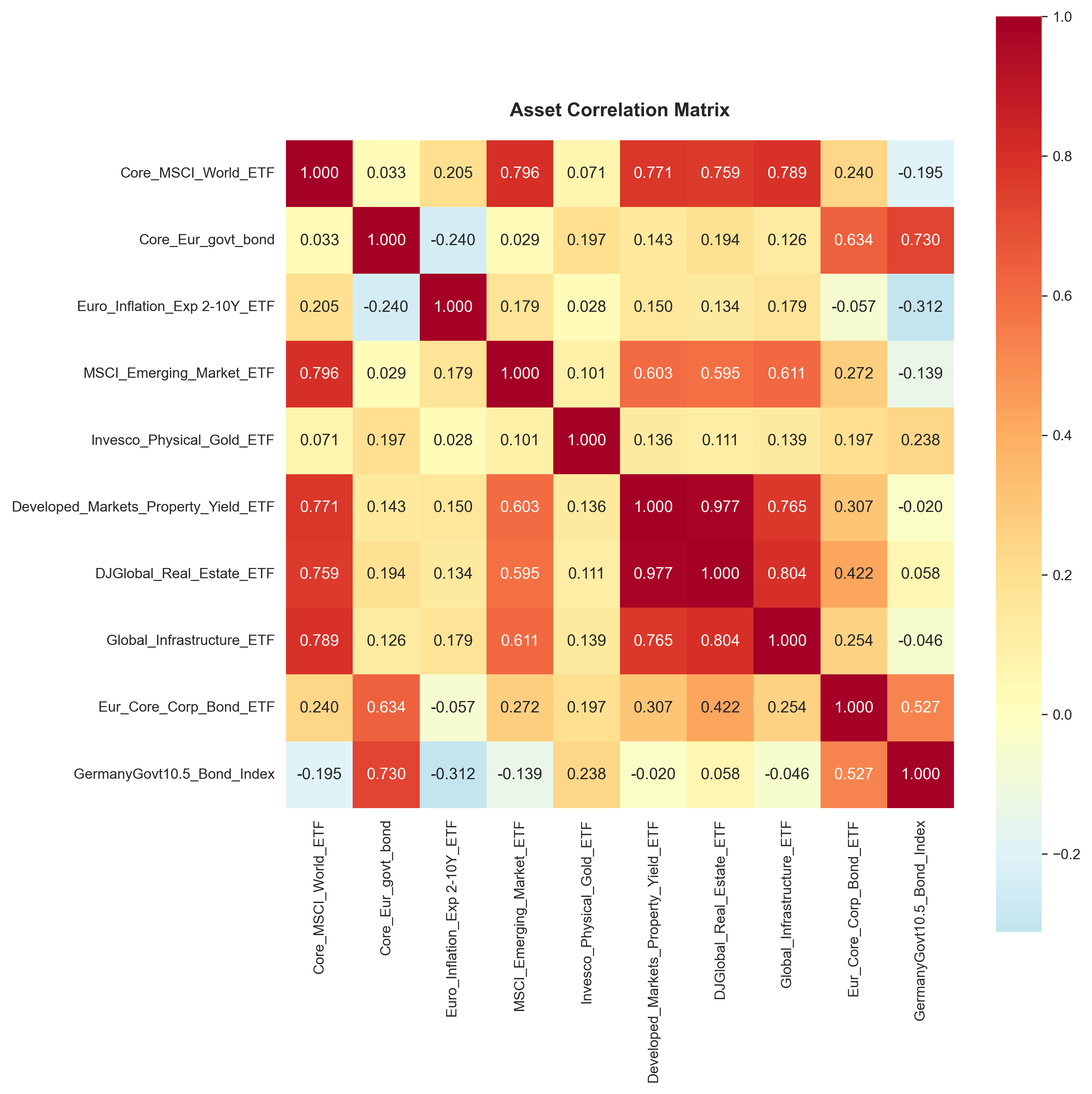
Asset correlation analysis

Bonds and gold strengthen diversification.

Global equities and infrastructure provide the main growth exposure. Euro government bonds, corporate bonds and gold broaden the return drivers within the portfolio.

Historical correlation matrix for the broader ten-asset investment universe.
Monte Carlo simulation

Projected retirement capital remains above target in the downside case.

Across 50,000 simulated paths over 23 years, the median portfolio reaches €1.42 million before tax. The 10th-percentile outcome is €973,167, compared with the €675,070 retirement target.

10th percentile€973kdownside projection
Median value€1.42m7.83% median CAGR
90th percentile€2.07mupside projection
Target success99.5%before tax
Simulated portfolio growth percentiles together with the portfolio glide path from age 45 to 68.
Tax impact

The median after-tax portfolio remains above €1.1 million.

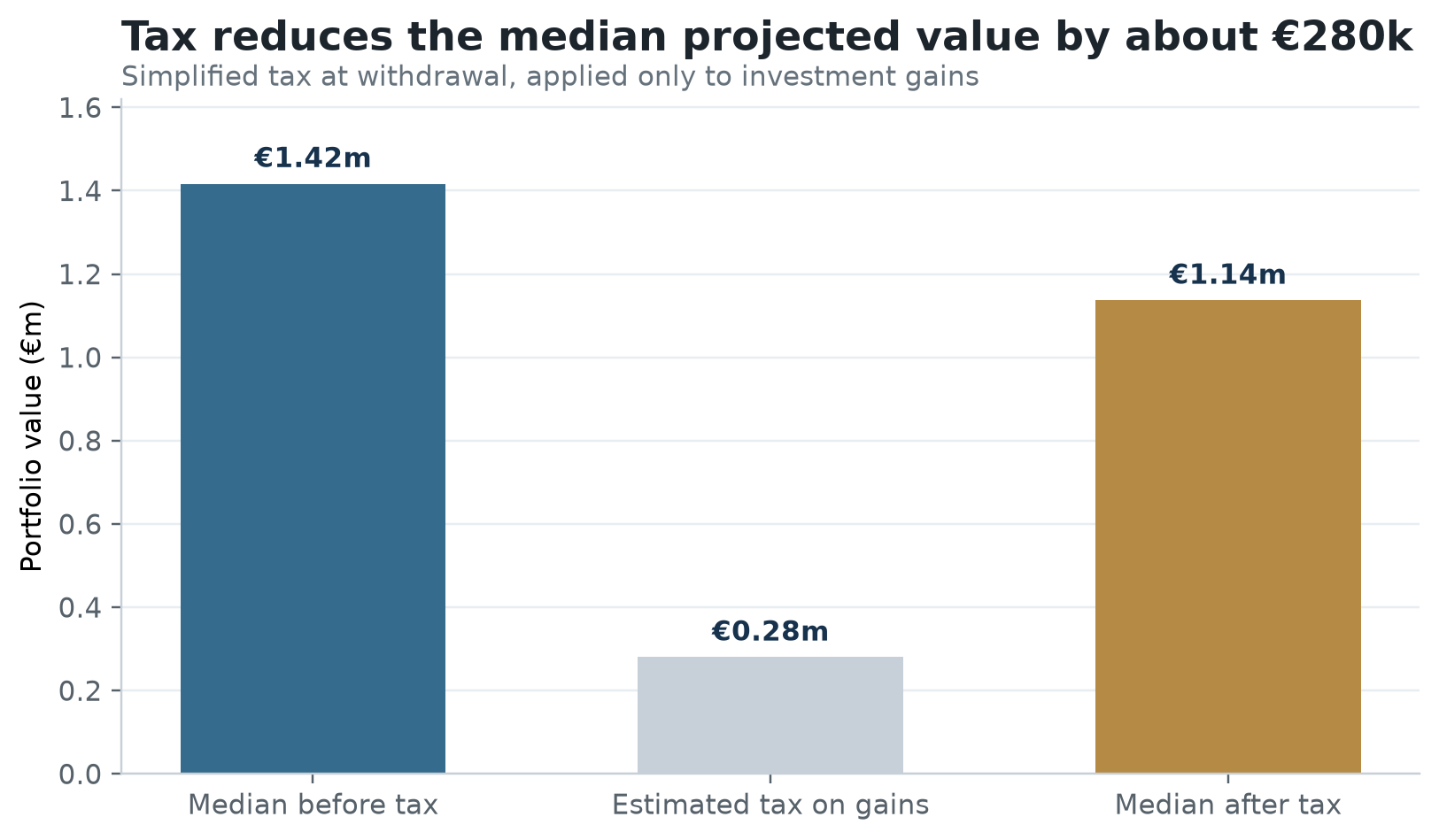
Estimated tax on investment gains reduces the median projected value from €1.42 million to €1.14 million. Under this simplified treatment, 97.2% of outcomes remain above the retirement target after tax.

Median portfolio value before tax, estimated tax on gains and after-tax value.
Equity ETF gains18.46%effective rate after partial exemption
Bond and gold gains26.38%standard capital-gains rate
Estimated tax at the median€280kapplied to investment gains
Median after-tax value€1.14mabove the €675k target
Stress testing

Persistently weak real returns present the greatest funding risk.

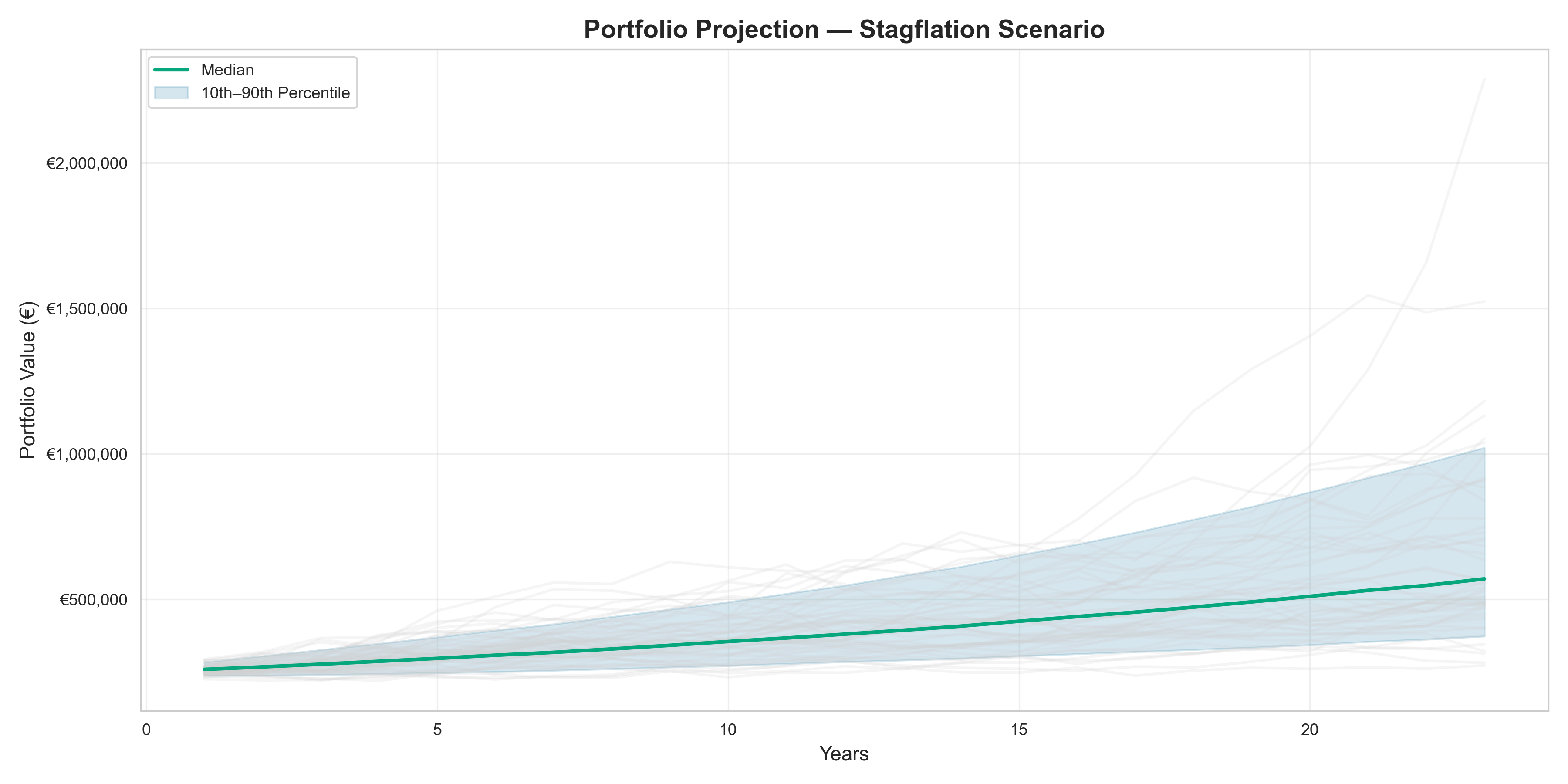
Under the stagflation scenario—6% equity returns, 2% bond returns, 5% gold returns and an additional annual drag—the median retirement value falls to approximately €570,000.

Stagflation simulation showing sample paths, median portfolio value and the 10th-to-90th percentile range over 23 years.

Stagflation

The median outcome falls below the capital target, showing the impact of prolonged low real returns.

Sequence risk

A major drawdown close to retirement can materially reduce the capital available when withdrawals begin.

Longevity risk

A longer retirement period increases the total withdrawals required from the portfolio.

Policy risk

Changes to pension benefits, healthcare costs or investment taxation can affect the funding requirement.

Methodology and documentation

Full assumptions, code and supporting material are available on GitHub.

The repository contains the pension calculation, gap analysis, portfolio analytics, glide-path simulation, tax assumptions and stress tests. Review the complete analysis →